Fewer opioid prescriptions mark progress, but workers compensation also needs timely, individualized measures of pain relief and function.
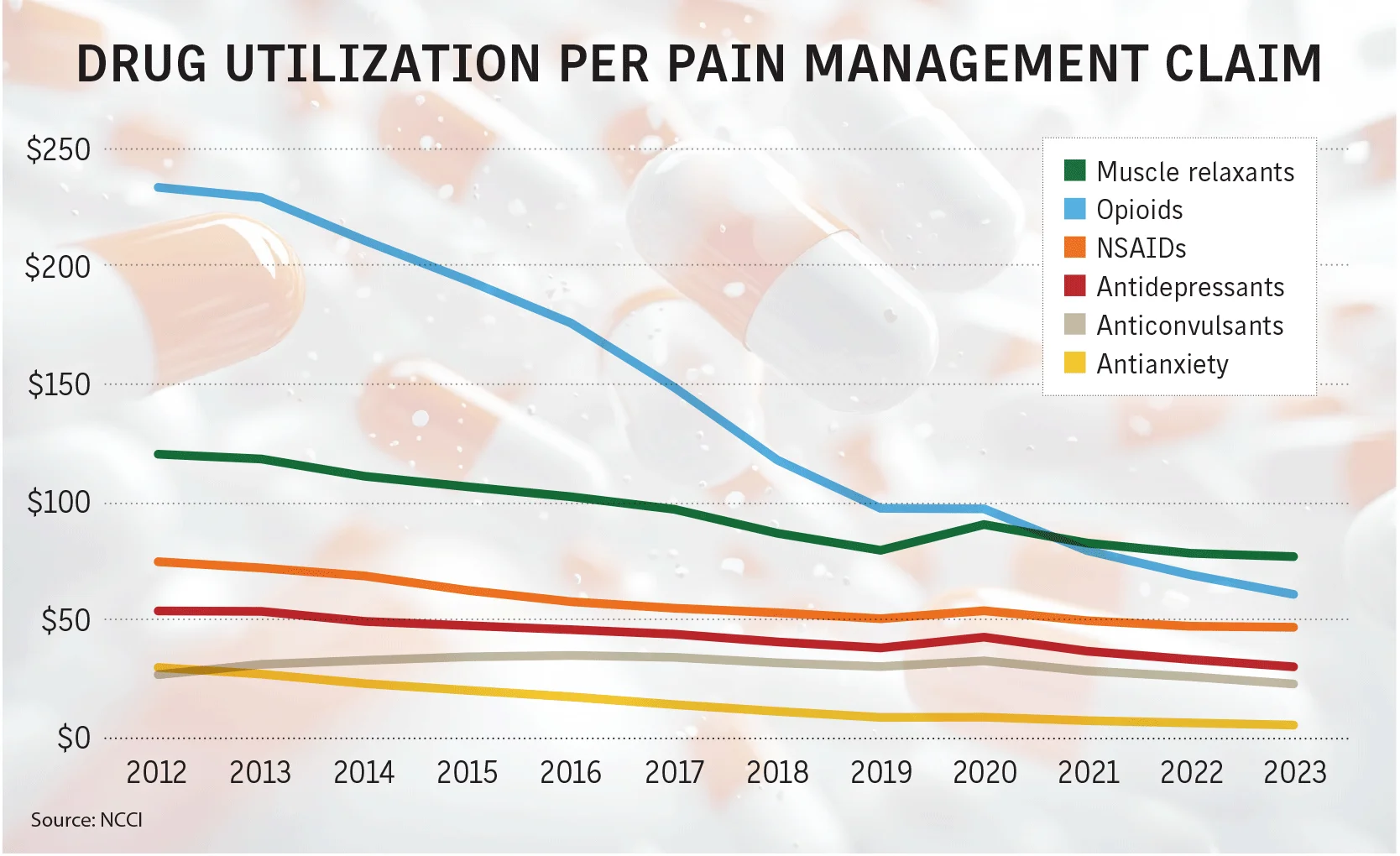
Workers compensation has reduced opioid prescribing, but prescription counts alone can’t show whether injured workers are recovering. A lower count can describe a change in treatment; it can’t establish whether pain has eased, mobility has improved or someone can return to ordinary activities. Those are harder outcomes to track, and they’re closer to the reason treatment is given.
That distinction became personal for me after three medically necessary C-sections. After my first son was born in 2007, an emergency procedure under general anesthesia left me in severe postoperative pain during a three-day Chicago hospital stay. I waited hours for medication and often spoke up only when I was in tears. The episode left me with a plain measure of whether care was reaching me: I was still in pain, and I had to make that visible before it was addressed.
For my second son’s birth in 2008, I asked whether I could manage my own pain medication. The hospital agreed after hearing about my earlier experience. I kept prescription pills at my bedside while caring for a newborn and took care because I was nursing. In retrospect, that level of access feels startling. The difference between those two experiences raises a practical question for any treatment system: how can it respond to a patient’s needs without losing sight of medication risks?
My third C-section, in 2021, brought another painful recovery, with minor surgical complications. I felt I had to plead for relief, went home with a small supply of prescription medication and called my doctor repeatedly because I could barely move or get out of bed. I can’t identify which policy or prescribing choice shaped that care. I can say that I felt the restrictions around treatment outweighed attention to my pain. A patient’s experience can’t explain the system on its own, but it can show what a prescription tally leaves out.
Measure recovery, not just prescribing
Those experiences stayed with me as I reported our October-November coverage of opioids in workers compensation (see story here). Reducing opioid use matters because these medications carry risks, and prescribing patterns deserve scrutiny. So does expanding physical therapy, behavioral care and other treatment. But whether those changes help workers recover remains an open question. Fewer prescriptions don’t answer it; a shift in what gets prescribed is only a useful result if the person’s condition and ability to function are also considered.
The CDC’s 2022 prescribing guideline calls for individualized care and cautions against rigid use of its dosage and duration recommendations. It covers outpatient prescribing, including medication provided at hospital discharge, rather than inpatient treatment. That distinction matters when comparing guidance with a patient’s care: the setting affects which recommendations apply. The guideline leaves room for clinical judgment, which is essential when patients’ needs and medical histories differ. A recommendation can help inform a decision, but it can’t describe every patient’s pain, recovery or response to treatment.

I had no history of drug misuse and understood that opioids carry risks. I wanted enough relief to recover and care for my baby. That context doesn’t make anyone risk-free, but it should inform decisions about treatment. This is more significant than it looks: the aim isn’t to treat a person’s history as a guarantee, but to weigh relevant information rather than let a single measure stand in for the whole case.
Workers compensation has tools to assess those decisions: pharmacy reviews, utilization review, nurse case management and regular contact with treating clinicians. Used well, these can help determine whether care is appropriate, whether it’s working and when the plan needs to change. The review should account for pain, medical history, other medications and the person’s ability to function. It also needs to happen quickly enough to matter to someone in pain now. A careful review that arrives after the immediate problem has passed may document a decision, but it can’t provide timely relief.
Function is part of the treatment picture
State prescribing requirements and coverage rules can complicate care. Still, systems should make individualized decisions possible within those constraints and identify policies that get in the way. That requires attention to what happens after a treatment decision: whether the worker reports improvement, whether they can participate in care, and whether the plan needs another look. Paper compliance alone doesn’t tell an injured person whether the treatment is helping.
Our reporting also looks at workers who have taken opioids for years. Their situations differ from a short postoperative recovery, but the same question applies: Does continuing, reducing or replacing medication help this person function? The answer may depend on the worker’s history, symptoms and response to care, so one prescribing measure can’t settle it. If you’re working in this space, the practical challenge is to track meaningful changes without pretending that every patient’s recovery follows the same timetable. A measure that captures prescribing can be useful, but it needs company.
“Treating the whole worker” sounds encouraging. The test comes when someone says the current plan isn’t working. In my case, I needed help getting out of bed and caring for my son. An injured worker may need sleep, mobility or enough relief to take part in physical therapy. Those outcomes belong in the measure of recovery, and the person still in pain is the one who can describe them. Here’s the thing: a system can count prescriptions with precision and still miss whether treatment is meeting the patient’s needs.
What the measures should show
The next question for workers compensation is whether its measures can connect treatment choices to the outcomes workers report. Prescription totals can show whether use is changing; they can’t, by themselves, show why it changed or what followed. Reviews and clinician contact can add context, but only if they include timely feedback from the person receiving care and lead to reassessment when the plan falls short.
And yet, that work doesn’t reduce to a single new score. Pain, movement and daily function can each tell part of the story, while a person’s medical history shapes how those signals should be read. The useful standard is whether care is being judged against the worker’s actual condition and whether decisions can adapt as that condition changes. A count can start the conversation. Recovery is the harder test.

Discussion
Sign in to join the discussion.